
"arabica plantations"
3000 article(s) found

Boutique coffee bean producing countries introduce Malagasy coffee
The Malagasy government plans to develop about 2000 hectares of Robbite coffee plantations and about 5000 hectares of Arabica coffee plantations. Therefore, the development of the coffee industry on the island depends on its potential in Arabian coffee, and once successfully developed, this coffee is expected to become the best. The origin of Madagascar coffee: Madagascar (Madagascar) is basically Robbins.
Introduction to Malagasy Coffee Flavor Malagasy Coffee characteristics
The Malagasy government plans to develop about 2000 hectares of Robart coffee plantations and about 5000 hectares of Arabica coffee plantations. Therefore, the development of the coffee industry on the island depends on its potential in Arabian coffee, and once successfully developed, this coffee is expected to become the best. The origin of Madagascar coffee: Madagascar (Madagascar) is basically

Zimbabwe Coffee quality Kenyan AA Coffee is as smooth and fruity as it is.
Zimbabwe's high-quality Arabica coffee beans cater to the needs of foodies. Coffee cultivation in Zimbabwe began relatively recently, in the 1960s, when farmers in southern Africa set up coffee plantations. Coffee cultivation in Zimbabwe is mainly concentrated in the eastern highlands near Mozambique, and the highlands are mainly made up of Chimanimani

Zimbabwe Coffee quality Kenyan AA Coffee is soft and smooth with rich fruity aromas
High-quality Arabica coffee beans cater to the needs of foodies. Coffee cultivation in Zimbabwe began relatively recently, in the 1960s, when farmers in southern Africa set up coffee plantations. Coffee cultivation in Zimbabwe is mainly concentrated in the eastern highlands near Mozambique, mainly by Chimanima
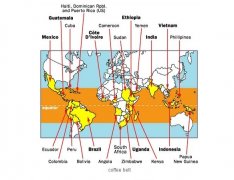
Where do good coffee beans come from? common sense of fine coffee.
Coffee trees need high altitude, tropical climate and fertile soil to grow the best coffee beans. Such climatic conditions on earth surround the equator, about 25 degrees north latitude to 30 degrees south latitude. In addition to location, there are many other factors that affect the quality of coffee: planting methods, soil fertility, weather, especially rainfall and light, and exact latitude.
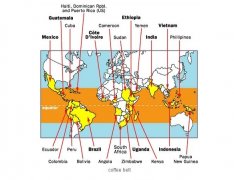
Where do coffee beans come from? The production zone of boutique coffee beans
Coffee trees need high altitude, tropical climate and fertile soil to grow the best coffee beans. Such climatic conditions on earth surround the equator, about 25 degrees north latitude to 30 degrees south latitude. In addition to location, there are many other factors that affect the quality of coffee: planting methods, soil fertility, weather, especially rainfall and light, and exact latitude.

Suggestions on Baking parameters of Bean treatment in Paradise Bird Manor of Papua New Guinea
Professional coffee knowledge exchange more coffee bean information please follow Coffee Workshop (Wechat official account cafe_style) Papua New Guinea Paradise Bird Manor Coffee area 01 | production area profile Papua New Guinean people regard the beautiful bird of paradise as a bird of freedom and joy, a gift from the gods. PNG AA Sigri Manor Arabica Coffee, like the migration of birds, is

Introduction to San Cristobal Coffee producing area in Ecuador
The famous South American brand, Ecuadorian Grade A coffee, has a large state-run seed value garden; 100% is produced in the natural vegetation zone of 1300-2000 meters highland, popular in Europe and the United States, and tastes exquisite world-class Arabica Arabica flavor at supermarket prices. ES Coffee is a clean organic coffee grown on the slopes of the Andes in Latin America. It is 100% pure coffee, through efforts to change

Grade A coffee producing area of Ecuador, Santa Cruz, Galapagos Islands.
As coffee is consumed by people all over the world, the world coffee industry is also moving towards mass production, while St. Cristobal, a small and unreliable coffee industry, is in trouble and is likely to be forced to give up without profit. It wasn't until the early 1990s that the Gonzalez family bought Hasunda Coffee Park. Humboldt current (HumboldtC

Unique aroma of Ecuadorian coffee Arabica coffee tree
St. Cristobal is a larger island in the Galapagos archipelago. At 410m above sea level, there is a small lake called El.Junco, which forms streams along the rocks and volcanic rocks on the southern slope of the island. Mineral-rich fresh water moistens the land of St. Cristobal, keeping the soil moist and fertile. For here.

High-quality Arabica coffee beans cater to the needs of gourmet Zimbabwean coffee
The term "fine coffee" was first put forward by Ms. Knudsen of the United States in Coffee and Tea magazine. At that time, Ms. Knudsen, as a coffee buyer at B.C. Ireland in San Francisco, was very dissatisfied with the neglect of the quality of raw coffee in the industry, and even some big roasters mixed a large amount of Robesda beans in the comprehensive beans, so she put forward the concept of boutique coffee.

Where do good coffee beans come from?
Coffee trees need high altitude, tropical climate and fertile soil to grow the best coffee beans. Such climatic conditions on earth surround the equator, about 25 degrees north latitude to 30 degrees south latitude.

Citrus-scented Panamanian boutique coffee beans planting situation, geographical location, climate and altitude
The first batch of coffee exported by Panama each year starts in November, and almost all high-quality coffee beans are shipped to France and Finland. Panama coffee is smooth, light and sour, and its excellent thousand-week coffee beans are pure and distinctive. Flavor: full-grained, high-quality Panamanian coffee, generally speaking, the price belongs to the low and medium price, but in the cup table

Ecuador coffee varieties of carapica coffee beans introduction
As coffee is consumed around the world, the world coffee industry moves toward mass production, and San Cristobal's smaller and less reliable coffee industry is in trouble and may eventually be forced to give up without profit. It wasn't until the early 1990s that the Gonzalez family bought Hassenda Coffee Plantation. Humboldt Current

A brief introduction to the cultivation of lively fragrant Panamanian boutique coffee beans, geographical location, climate and altitude
La Esmeralda Manor has won 12 coffee competitions so far, and the highest bidding record for three times in online open bidding is US $21 in 2004, US $50.25 in 2006 and US $130 in 2007. Of course, other countries have also soared a pound of good coffee close to $50 (Brazil's CoE champion Fazenda Santa Ins in 2005)

A brief introduction to the Market Price of Panamanian Fine Coffee Bean varieties with Citrus Flower scent
Suggested roasting method: medium roasted ★★: market for good Panamanian coffee: the first batch of coffee exported from Panama (Panama) each year is shipped in November, and almost all high-quality coffee beans are shipped to France and Finland. Panama coffee is smooth, light and sour, and its excellent thousand-week coffee beans are pure and distinctive. Flavor: full granule and quality

Villa Donica Manor Panamanian nut aroma Pokui turquoise raw beans
There are three ways of plantation: sunshine plantation, full shade plantation and semi-shade plantation. Plantations with more than 50 plants per hectare are fully shaded plantations, 25-50 plants are semi-shaded plantations, and less than 25 plants are called sunshine plantations. What is the effect of shading and shading on coffee in the plantations of the two neighbors with the same planting conditions? Shade plantations can slow down coffee

Brief introduction to the treatment method of grinding degree and baking degree of lively fragrant Panamanian boutique coffee beans
La Esmeralda Manor has won 12 coffee competitions so far, and the highest bidding record for three times in online open bidding is US $21 in 2004, US $50.25 in 2006 and US $130 in 2007. Of course, other countries have also soared a pound of good coffee close to $50 (Brazil's CoE champion Fazenda Santa Ins in 2005)

Aromatic Ecuadorian fine coffee beans Flavor Taste Manor Features
In 1875, 340 years after Frei Thomas de Berlanga discovered the island, an indigenous man named Cobos arrived on San Cristobal Island, where he established the Hassenda Coffee Plantation and planted about 100 hectares of Arabic bourbon trees. Because the plantation is located between 140 meters and 275 meters above sea level, the climate is equivalent to the climate between 915 meters and 1830 meters inland.

Characteristic description of washed coffee beans in Ethiopian Red Cherry Project Mormora Momora Plantation
Professional barista exchanges please follow the coffee workshop (Wechat official account qianjiecoffee) Ethiopia is the country where coffee was first discovered, in terms of coffee quality and output, Ethiopia is still the most important producing country and the best, coffee is mostly the traditional Arabica species, the annual output is about 350000 tons and more than 70% are exported to countries around the world, about 15 million people in the country are engaged in coffee